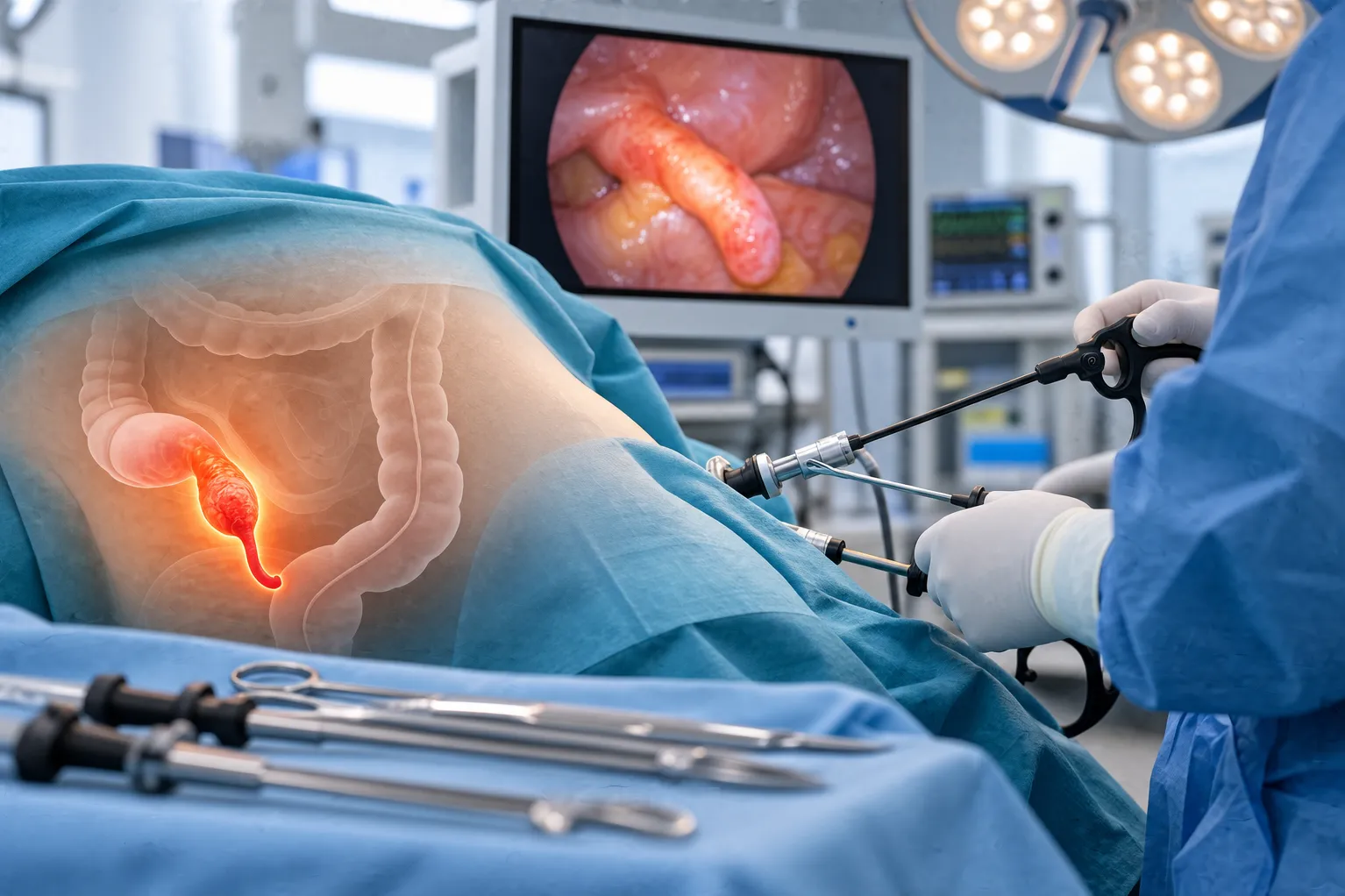
An infected appendix can worsen rapidly. If pressure and inflammation continue, the appendix may perforate or rupture, allowing infected material to spread inside the abdomen. This can lead to an abscess, peritonitis or sepsis.
Appendix infection and rupture surgery is therefore treated as an urgent surgical matter. A patient with worsening symptoms should go to an emergency department rather than wait for a routine appointment.
Recognising Possible Appendicitis
The classic symptom is abdominal pain that begins near the navel and moves towards the lower right side. However, not every patient follows this pattern. The position of the appendix, pregnancy, age and other factors can change where pain is felt.
Concerning symptoms include:
- Increasing or persistent abdominal pain
- Pain aggravated by walking, coughing or movement
- Nausea or vomiting
- Loss of appetite
- Fever
- Abdominal guarding or marked tenderness
- Bloating
- Diarrhoea or constipation
- General weakness or feeling seriously unwell
A temporary reduction in pain does not always mean the problem has resolved. In some cases, pain may change after perforation before widespread inflammation becomes more evident.
How Doctors Assess the Condition
Assessment usually includes abdominal examination, blood tests and imaging. Ultrasound may be used, while CT scanning can provide further detail in selected patients. Pregnancy testing may be relevant because gynaecological and pregnancy-related emergencies can produce similar symptoms.
The surgical team evaluates whether the appendix is inflamed, perforated or associated with a collection of pus. These findings influence the timing and type of treatment.
Surgery for a Ruptured Appendix
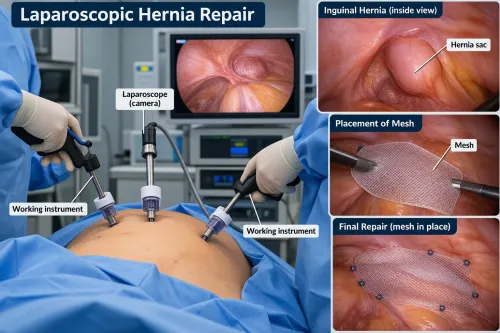
Appendicectomy removes the infected appendix. A laparoscopic approach may still be possible in some complicated cases. However, extensive contamination, difficult anatomy or severe inflammation can make an open operation or larger incision necessary.
The surgeon cleans infected material from the abdominal cavity. Antibiotics are administered, and a drain may be used in selected situations. Hospital stay is often longer than it is after uncomplicated appendicitis.
The NHS guidance on appendicitis explains that the abdominal area is cleaned if the appendix has burst. It also notes that recovery may take longer when complications are present.
When an Abscess Has Formed
Not every appendicular abscess is managed in exactly the same way. In a stable patient with a contained collection, treatment may initially involve intravenous antibiotics and image-guided drainage. Surgery may be delayed until inflammation settles, depending on the findings.
A patient who is unstable, has widespread infection or continues to deteriorate may need more immediate intervention. Treatment decisions must be individualised by the hospital team.
Recovery After Complicated Appendicitis
Patients may need antibiotics, pain control and monitoring of bowel function. Before discharge, they should understand how to care for the wound and when to return for review.
Urgent postoperative warning signs include:
- Increasing abdominal pain
- Persistent fever
- Repeated vomiting
- Pus or spreading redness around a wound
- Increasing abdominal swelling
- Inability to eat or drink
- Shortness of breath or unusual weakness
Patients in Chembur, Mumbai, Maharashtra, should use nearby emergency hospital services immediately if rupture is suspected. Dr Janhavi Kapadia provides surgical assessment and laparoscopic treatment where appropriate, but an emergency condition should never be delayed to seek a specific clinic slot.
Early treatment generally means a less complicated clinical course. The safest decision is to treat worsening abdominal pain as a medical problem requiring examination, not as acidity or indigestion without confirmation.
Keywords