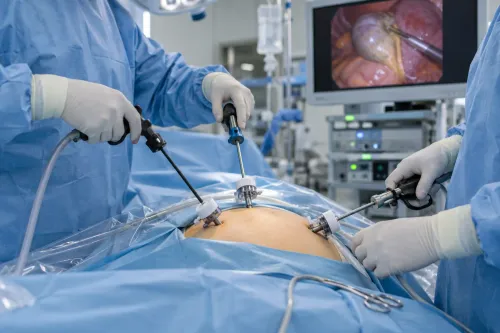
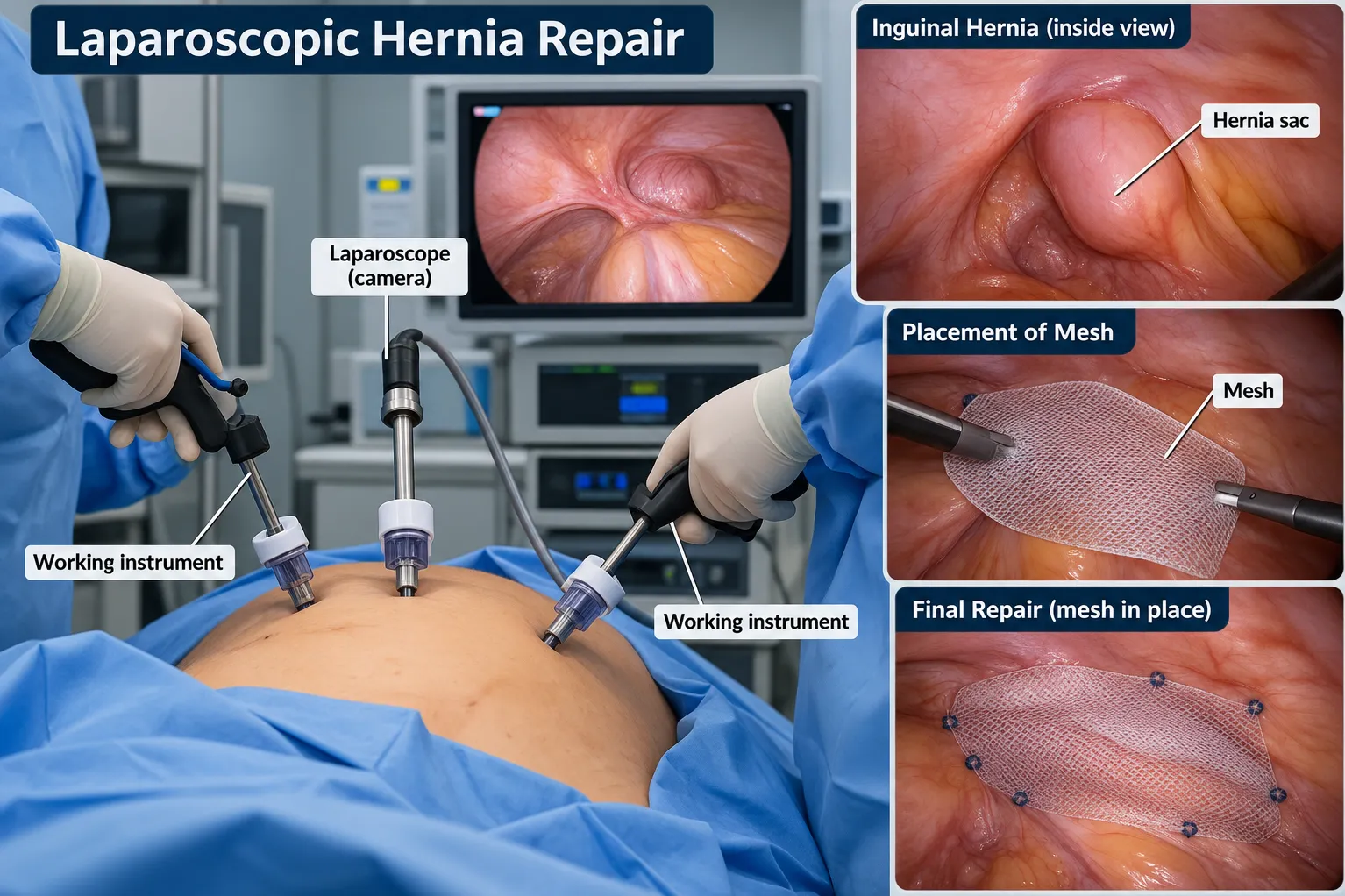
Selecting a surgeon for hernia repair involves more than searching for the nearest clinic or the smallest advertised incision. Hernias vary by location, size, symptoms and complexity. The surgeon must decide whether observation, open repair or laparoscopic repair best fits the individual case.
A laparoscopic hernia repair specialist should provide a clear diagnosis, explain alternatives and discuss recovery without guaranteeing a particular outcome.
Confirm That the Hernia Has Been Properly Assessed
Many hernias are diagnosed through history and physical examination. Imaging may be requested when the swelling is difficult to identify, symptoms are unusual or the patient has a complex incisional or recurrent hernia.
The consultation should establish:
- The type and location of the hernia
- Whether it can be reduced
- Whether it contains fat or bowel
- The level of pain or activity limitation
- Whether it is new or recurrent
- Previous abdominal operations
- Factors that may affect healing
A planned repair is different from emergency treatment for incarceration or strangulation.
Ask About Open and Laparoscopic Options
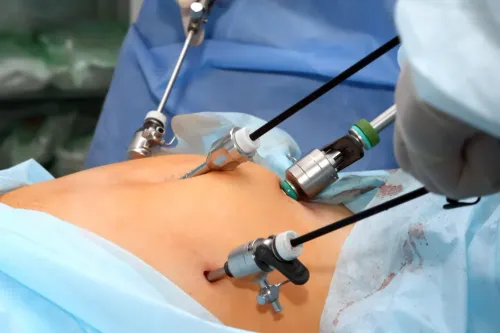
A trustworthy surgeon should be comfortable explaining why laparoscopy is or is not appropriate. Laparoscopic repair may be helpful in selected bilateral, recurrent or abdominal-wall hernias, but open repair remains suitable for many patients.
The American College of Surgeons’ patient guidance states that operative choice depends on factors including hernia size and location, recurrence, health, anaesthesia risk and surgical expertise.
Ask the surgeon:
- Which approach do you recommend?
- Why does it fit my hernia?
- Will mesh be used?
- Where will the mesh be positioned?
- What might require conversion to open surgery?
- What is the expected activity restriction?
- How is recurrence monitored?
Review Surgical Experience Carefully
Patients can ask how frequently the surgeon treats the relevant hernia type and whether both open and laparoscopic approaches are performed. A surgeon who understands both methods can select treatment according to anatomy rather than applying one technique to every case.
Hospital facilities also matter. Anaesthesia support, sterile operating systems, postoperative monitoring and access to emergency care contribute to safe treatment.
Discuss Personal Risk Factors
Smoking, uncontrolled diabetes, obesity, chronic cough, constipation and poor nutrition may increase wound or recurrence risks. Some of these factors can be improved before elective surgery.
The surgeon should also review:
- Heart and lung conditions
- Blood-thinning medication
- Allergies
- Previous mesh repair
- Pregnancy plans where relevant
- Occupation and lifting requirements
- Availability of help after discharge
A realistic plan balances the need for repair with opportunities to reduce avoidable risk.
Understand the Recovery Plan
Patients should leave the consultation knowing how pain will be controlled, when they can walk, bathe, drive and return to work, and what lifting limitations apply. Recovery differs between a small uncomplicated groin hernia and a large recurrent incisional hernia.
Dr Janhavi Kapadia evaluates patients seeking laparoscopic hernia repair in Sion and central Mumbai, Maharashtra. Her consultations include discussion of open and minimally invasive options, which may be reassuring for patients who prefer treatment from a female surgeon.
Choose a specialist who welcomes questions and explains uncertainty honestly. The best sign of readiness is not a promise of painless or scarless surgery, but a diagnosis-specific plan supported by appropriate preparation, informed consent and structured follow-up.
Keywords