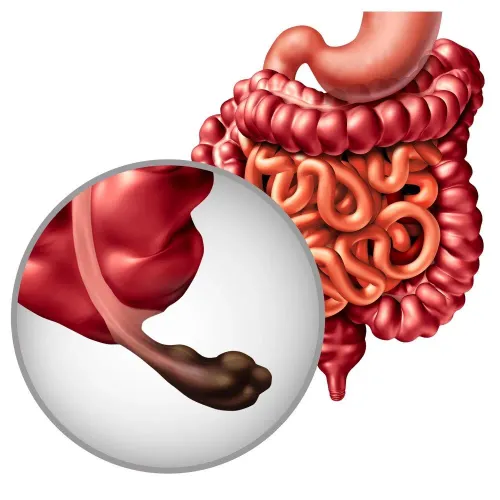
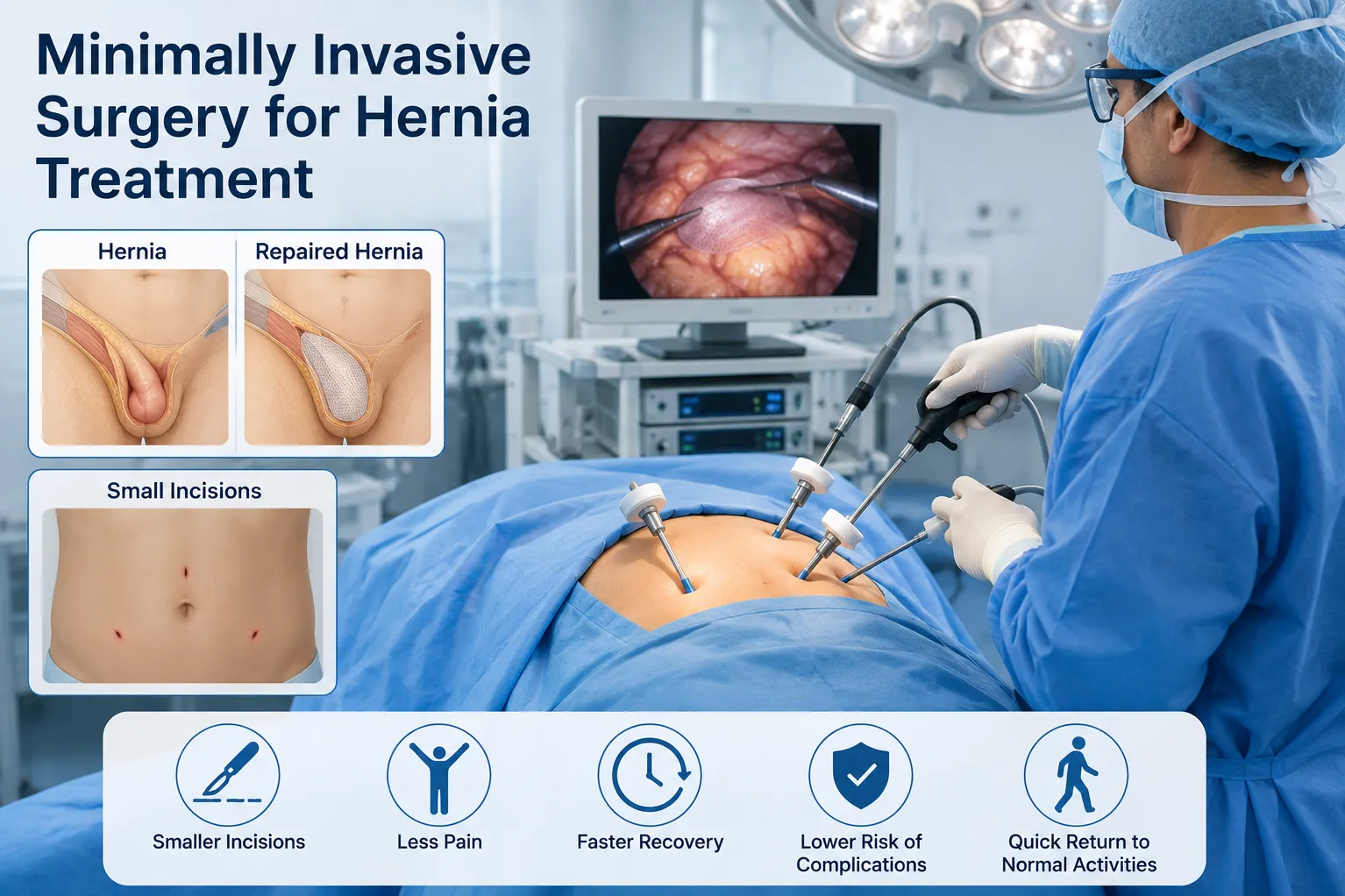
A hernia develops when tissue pushes through a weak area in the muscle or connective tissue that normally contains it. It may appear as a swelling in the groin, around the navel or near a previous surgical scar. Some hernias cause only mild discomfort, while others become painful or trap bowel inside the defect.
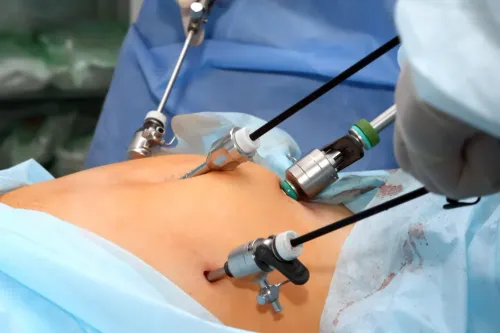
Minimally invasive surgery for hernia treatment repairs the weak area through small incisions using a camera and specialised instruments. It is an important option, but it is not automatically the best approach for every hernia.
Common Types of Abdominal Hernia
An inguinal hernia appears in the groin and is especially common in men. A femoral hernia develops lower in the groin and requires careful assessment because it may have a greater risk of complications.
An umbilical hernia occurs at or near the navel. An incisional hernia develops through a weakened area from an earlier abdominal operation. Hernias can also differ substantially in size, location and complexity.
How Minimally Invasive Repair Works
During laparoscopic repair, the patient receives general anaesthesia. The surgeon places a camera through a small incision, views the hernia from inside the abdomen and repairs the defect using sutures, mesh or a combination appropriate to the case.
The American College of Surgeons explains that groinhernias can be repaired through open or laparoscopic approaches and that the choice depends on factors such as hernia location, recurrence, health and anaesthesia risk.
Potential advantages of a minimally invasive approach can include smaller wounds and a different postoperative pain pattern. It may be particularly useful for certain bilateral or recurrent groin hernias. These benefits vary, however, and should not be promised to every patient.
When Open Surgery May Be Preferred
Open repair remains a well-established and effective option. It may be recommended when:
- The hernia is very large or complex
- The patient cannot safely receive general anaesthesia
- Previous abdominal operations make laparoscopy difficult
- There is extensive scar tissue
- Bowel damage or contamination is suspected
- The hernia anatomy is better addressed through an open incision
An experienced surgeon should be able to explain why one approach is more appropriate than another.
Warning Signs of a Complicated Hernia
A hernia that becomes trapped is described as incarcerated. If its blood supply is compromised, it becomes strangulated and requires urgent care.
Seek immediate medical attention if a hernia becomes suddenly painful, firm or impossible to push back, particularly when accompanied by vomiting, abdominal swelling, fever or inability to pass stool or gas. Delaying treatment may increase the risk of bowel damage.
Is Mesh Always Used?
Mesh reinforces the weakened area and is used in many adult hernia repairs because closing the defect with stitches alone may not provide sufficient support in some cases. Mesh is not identical in every operation, and its use depends on the hernia type, tissue quality and risk of contamination.
Patients should ask where the mesh will be placed, why it is recommended and what complications should be monitored. Concerns about mesh deserve a balanced discussion rather than either automatic rejection or casual reassurance.
Reducing the Risk of Recurrence
Recovery instructions may include temporary limits on lifting, gradual return to activity and attention to wound care. Long-term risk reduction can involve smoking cessation, weight management, constipation treatment and control of chronic coughing.
For patients in Sion and central Mumbai, Maharashtra, Dr Janhavi Kapadia provides assessment for different hernia types and discusses minimally invasive and open treatment options. The aim of evaluation is to match the operation to the patient’s anatomy, symptoms and health, not simply to select the smallest incision.
Keywords