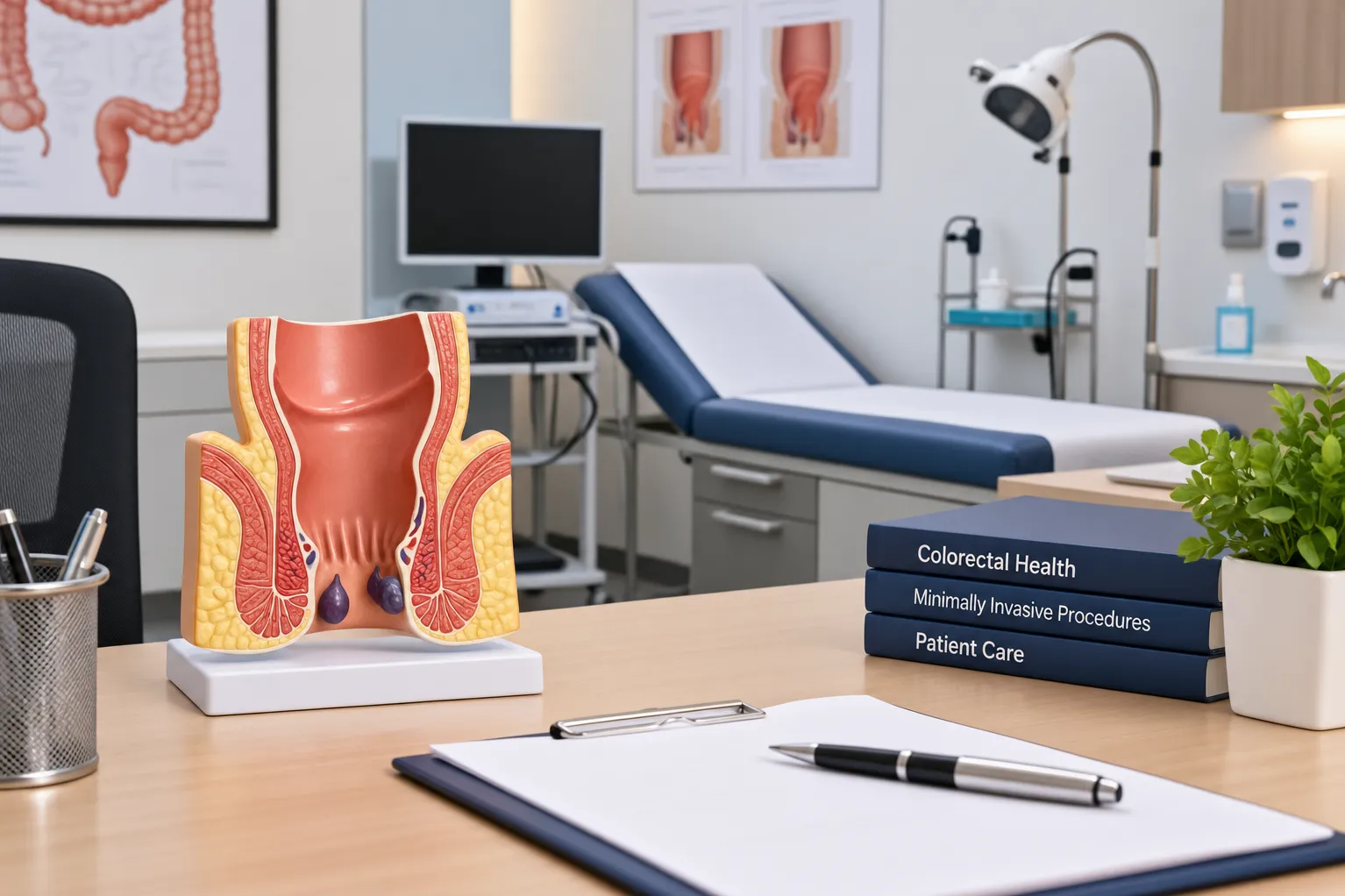
External haemorrhoids form beneath the sensitive skin around the anal opening. They may cause itching, swelling, discomfort or difficulty maintaining hygiene. If a clot develops inside an external haemorrhoid, pain can become sudden and intense.
Not every external haemorrhoid needs to be removed. An external hemorrhoids removal specialist first determines whether the patient has an active thrombosis, a residual skin tag, mixed haemorrhoidal disease or another anal condition.
Painful Thrombosed External Haemorrhoids
A thrombosed external haemorrhoid often appears as a tender bluish or purple lump. Pain may become severe over a short period. The appropriate treatment depends partly on how recently symptoms began, the intensity of pain and the patient’s health.
Some cases can be managed with pain relief, warm sitz baths and measures that keep stools soft. In selected patients with severe recent-onset pain, a surgeon may discuss removing the clot and affected haemorrhoidal tissue under anaesthesia.
Simply puncturing or draining the swelling without proper assessment may provide incomplete relief or lead to reaccumulation. The procedure should be performed in an appropriate clinical setting.
Long-Standing External Swelling
After swelling settles, stretched skin may remain around the anus. These anal skin tags are usually harmless, but they can interfere with cleaning or become repeatedly irritated. They should not be confused with active piles, warts or other skin conditions.
Removal may be considered when symptoms are persistent and the expected benefit outweighs wound discomfort. Surgery performed purely for appearance requires careful discussion because the anal area is sensitive and healing can be uncomfortable.
Mixed Internal and External Piles
Many patients who describe “external piles” actually have prolapsing internal haemorrhoids, external components or both. Treating only the visible swelling may leave the main source of bleeding or prolapse unaddressed.
A complete assessment may include:
- Inspection of the anal area
- Gentle digital examination where appropriate
- Proctoscopy to inspect the anal canal
- Review of constipation and bowel habits
- Assessment for anaemia or other causes of bleeding
- Additional bowel evaluation when clinically indicated
Questions to Ask the Surgeon
Before agreeing to removal, patients should ask:
- Is this a thrombosed haemorrhoid, skin tag or prolapsed internal pile?
- Is immediate removal likely to improve the pain?
- Can it settle without surgery?
- What anaesthesia will be used?
- How will the wound be managed?
- What bowel regimen will reduce discomfort?
- Could combined treatment be required?
The NIDDK treatment overview notes that surgical haemorrhoidectomy may be used for large external haemorrhoids and certain prolapsing internal haemorrhoids that have not responded to other treatments.
Privacy During Sensitive Care
Embarrassment can lead patients to delay examination until pain or bleeding becomes difficult to manage. A professional consultation should provide privacy, explain the examination beforehand and obtain consent at each stage. Patients may also ask whether a chaperone can be present.
Dr Janhavi Kapadia assesses external and mixed haemorrhoidal conditions for patients in Chembur, Mumbai, Maharashtra. Those seeking a female surgeon can discuss symptoms, examination preferences and treatment choices in a structured clinical setting.
Severe pain with fever, spreading redness, pus or difficulty passing urine requires prompt evaluation because an abscess or another condition may be present. Accurate identification of the swelling is the first step towards treatment that addresses the real cause rather than only the visible lump.
Keywords